

AI + Low-Code: the power combo for application modernization
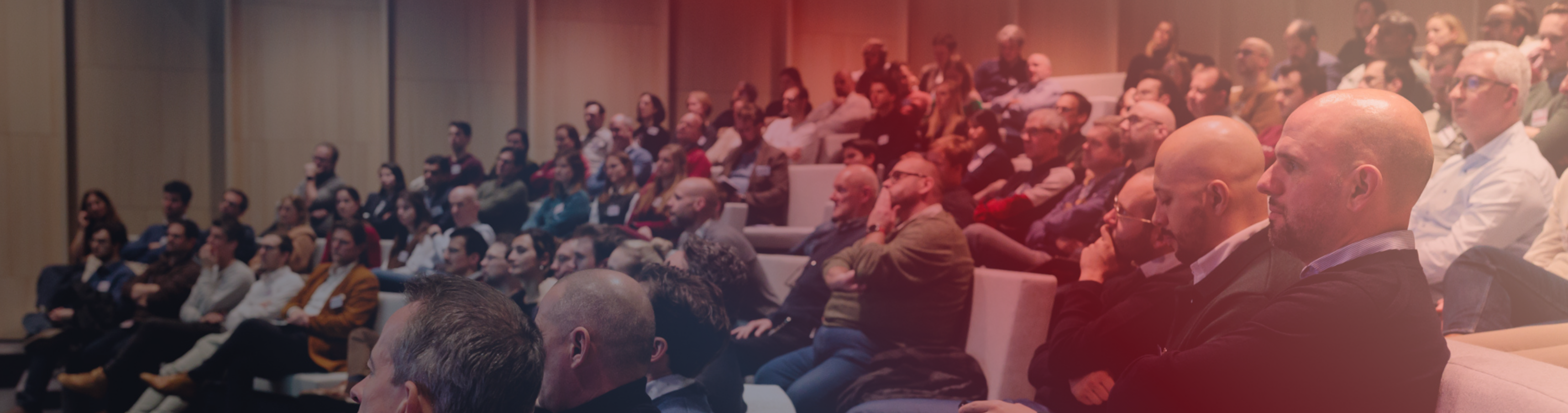
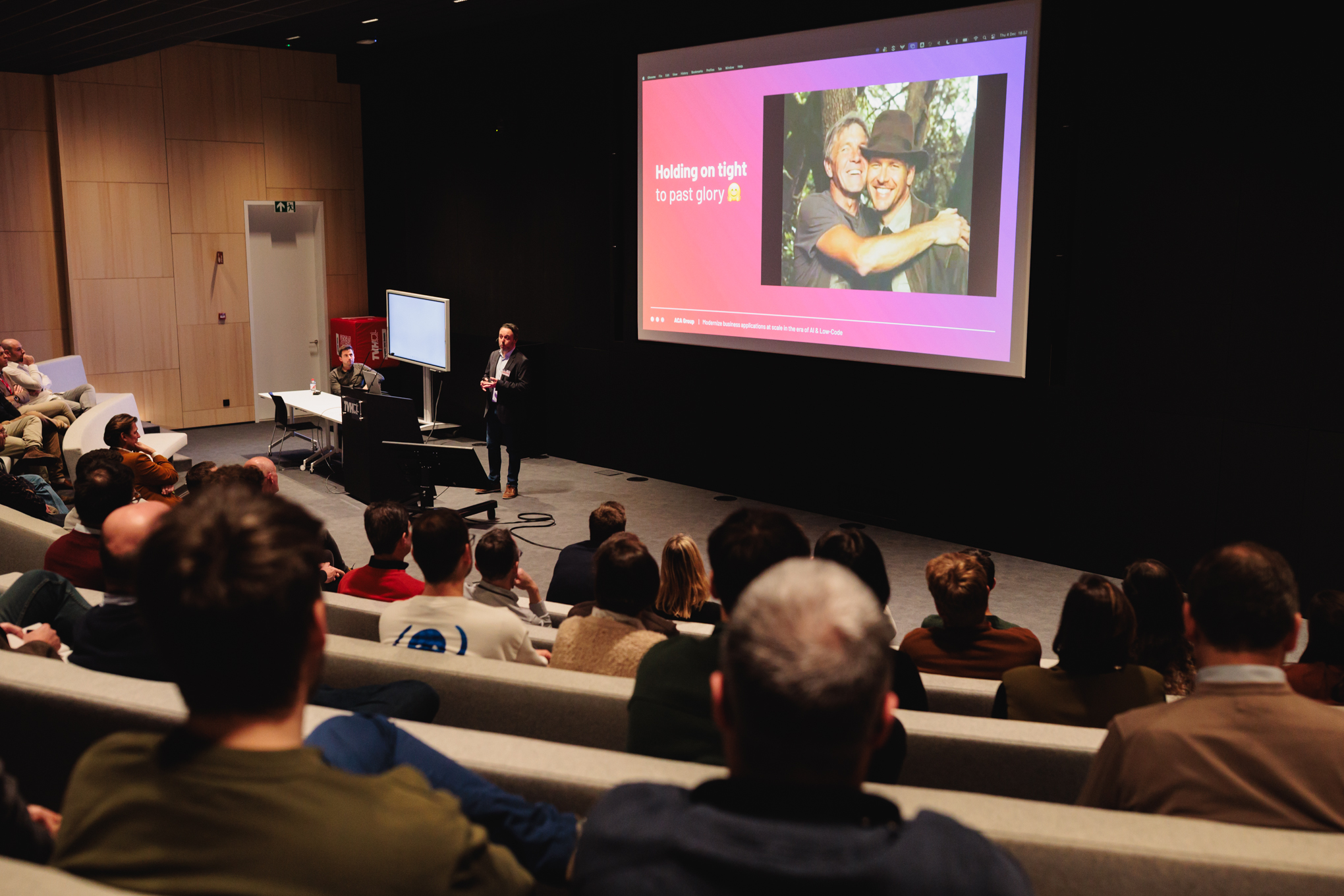
At the TVH IT Talks 205, Greg Van Dorpe (Low-Code Offering Lead) shared ACA’s view on the current IT landscape with a room of engaged participants. He highlighted the realities many teams recognise: growing expectations, talent shortages and the struggle to balance innovation with keeping existing systems running. It sparked a broader conversation about how organizations can modernize more sustainably.
Why evolving the application landscape matters
Across industries, organizations rely on systems that have grown organically over many years. While these systems provide stability, they can slow down innovation when changes are difficult or expensive to implement. Traditional custom development remains essential for big, complex and mission-critical applications, but it is not always the most efficient approach for every type of solution.
SaaS platforms offer speed and out-of-the-box capabilities, although they can introduce limitations or high customization costs. The challenge is finding the right balance.
Our approach: choosing the right technology for the right need
At ACA, we don’t see Low-Code as a replacement for custom development. Instead, we combine both approaches to fit the problem at hand:
- Custom development for deep engineering, complex logic, unique business capabilities and high-differentiation use cases.
- Low-Code for accelerating delivery, standardizing and uniformising development practices, modernizing legacy systems, and supporting high-volume or fast-changing business processes.
This combination gives organizations the flexibility to innovate where it matters, while keeping long-term cost and complexity under control.
Low-Code as a strategic accelerator
Enterprise-grade Low-Code platforms enable teams to:
- deliver applications 2 to 5 times faster
- reduce total cost of ownership
- collaborate more effectively with the business
- bring consistency and maintainability to the landscape
In our projects, Low-Code is particularly valuable for:
- legacy & application landscape evolution
- digital customer and employee experiences
- AI adoption in a controlled and practical way
- extending core systems without creating fragile and costly customizations
The principle is simple: keep the core stable and clean, innovate at the edge, and use engineering effort where it has the most impact.

AI-first: from CoPilots to Agentic AI
AI plays an increasingly important role in modern software development. Greg highlighted how GenAI can help analyse legacy systems, support documentation and accelerate development. According to Gartner, by 2027 GenAI tools will be used to explain legacy business applications and generate appropriate replacements, potentially reducing modernization costs by up to 70%.
The rise of AI Copilots is quite overwhelming this year. So what is the real value they currently bring?
A Gartner report from 2025 shows that AI Co-Pilots deliver a productivity boost (5-20%) but introduce new risks due to still being "uncontrollable & unpredictable. Introducing a new level of complexity in maintaining a cohesive and manageable code base when developing with more than one developer on a project.
A key topic in the session was Agentic AI, autonomous AI agents capable of performing tasks or making decisions. While the technology is promising, most pilot projects still face challenges around reliability, orchestration and governance.
According to an MIT report from mid 2025, 95% of agentic AI pilot projects fail to reach production or show measurable ROI. Meanwhile, the 5% that make it are making millions.
At ACA, we take a practical approach:
- focus on specialised agents, not general-purpose “do-everything” agents
- keep humans in the loop
- ensure strong governance and data management
- align AI adoption with real business value
The real power lies in the combination of AI and Low-Code

The biggest impact happens where Low-Code and AI strengthen each other. Greg demonstrated how OutSystems, as an AI-first development platform, acts as a true Swiss army knife for IT teams thanks to:
- AI-driven app generation from prompts
- AI-assisted development and quality checks
- Building and orchestrating AI agents with a human in the loop
- Supported by an enterprise-grade full-stack Low-Code development platform
An AI-first & Low-Code approach also requires transformation: real product teams, careful technology choices to avoid lock-in and strong governance to prevent Shadow IT/AI and ensure data security. One conclusion stood out: while these technologies reshape IT, the role of skilled IT and design professionals remains crucial for delivering high-quality and secure solutions.

Want to explore how AI & Low-Code can accelerate your IT transformation?