

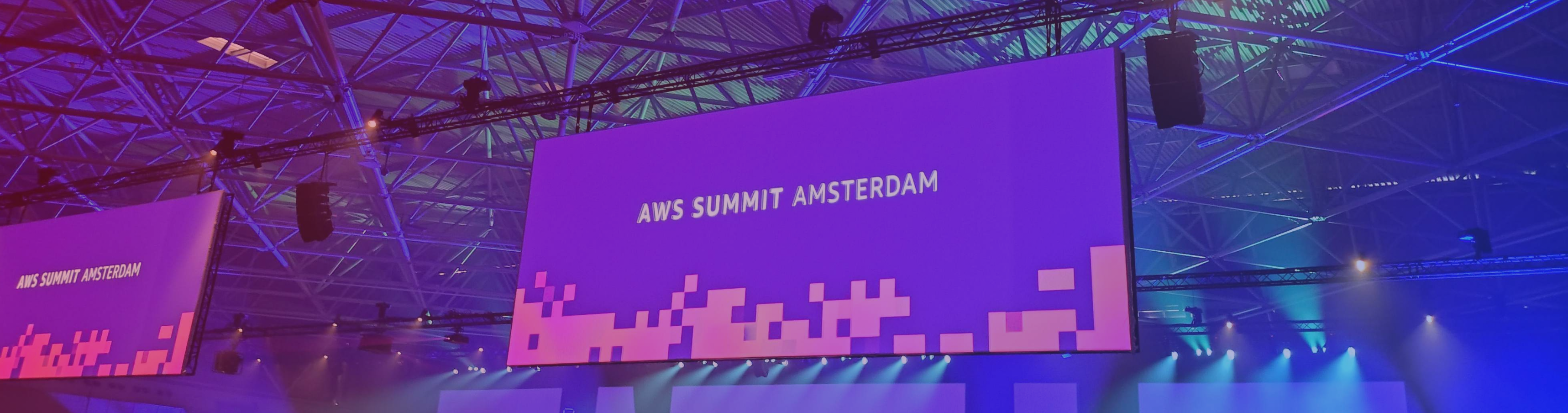
AWS Summit Amsterdam: what stayed with us
Wednesday May 27th 2026 — The Cloud team headed to Amsterdam for the AWS Summit. A free conference where AWS enthusiasts and experts come together, new technologies get the spotlight, and one question keeps coming back throughout the day: what are you actually doing with AI?
The scene
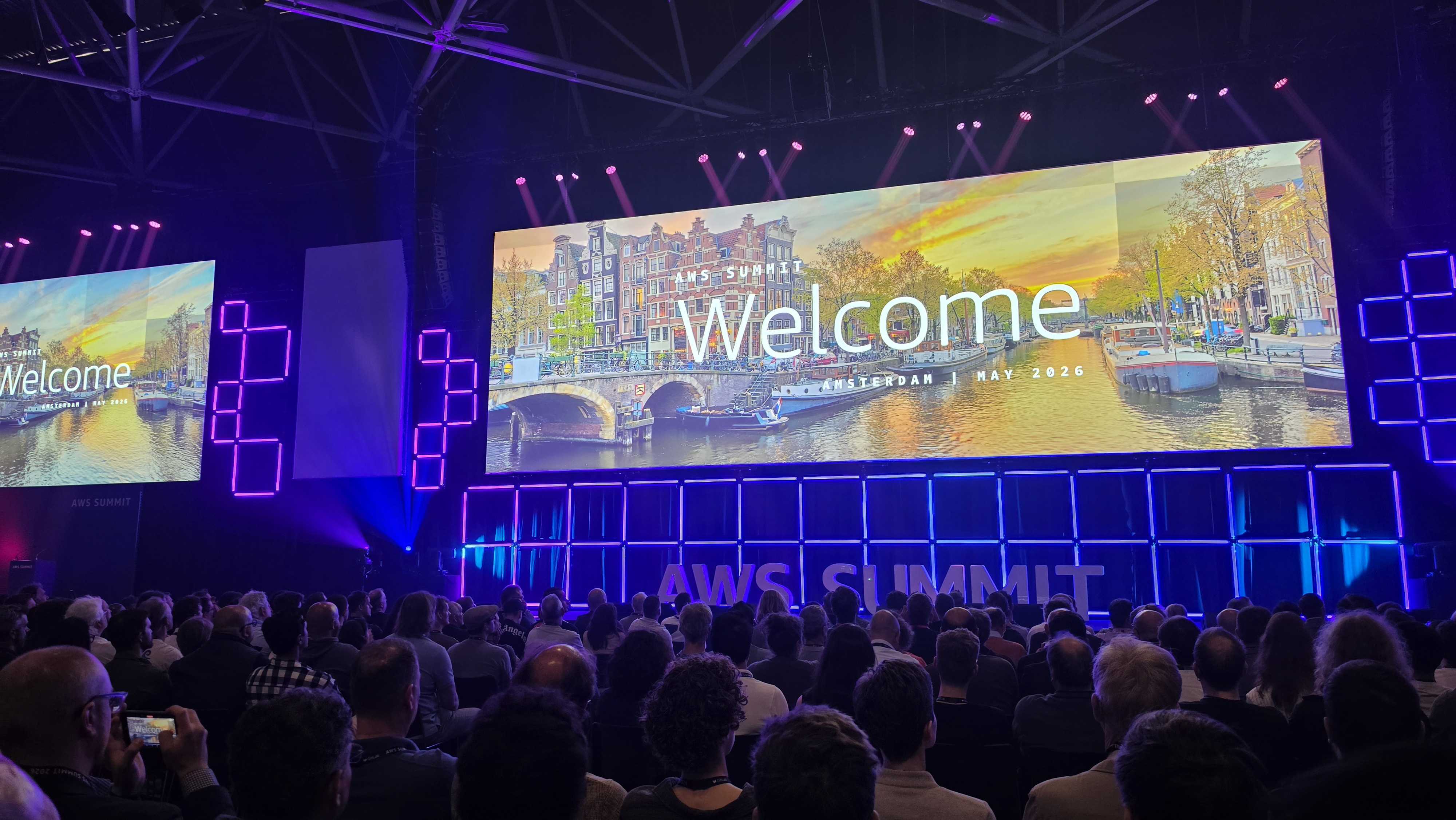
This year's venue was the RAI in Amsterdam. A huge complex of conference and exhibition halls, close to the city center.
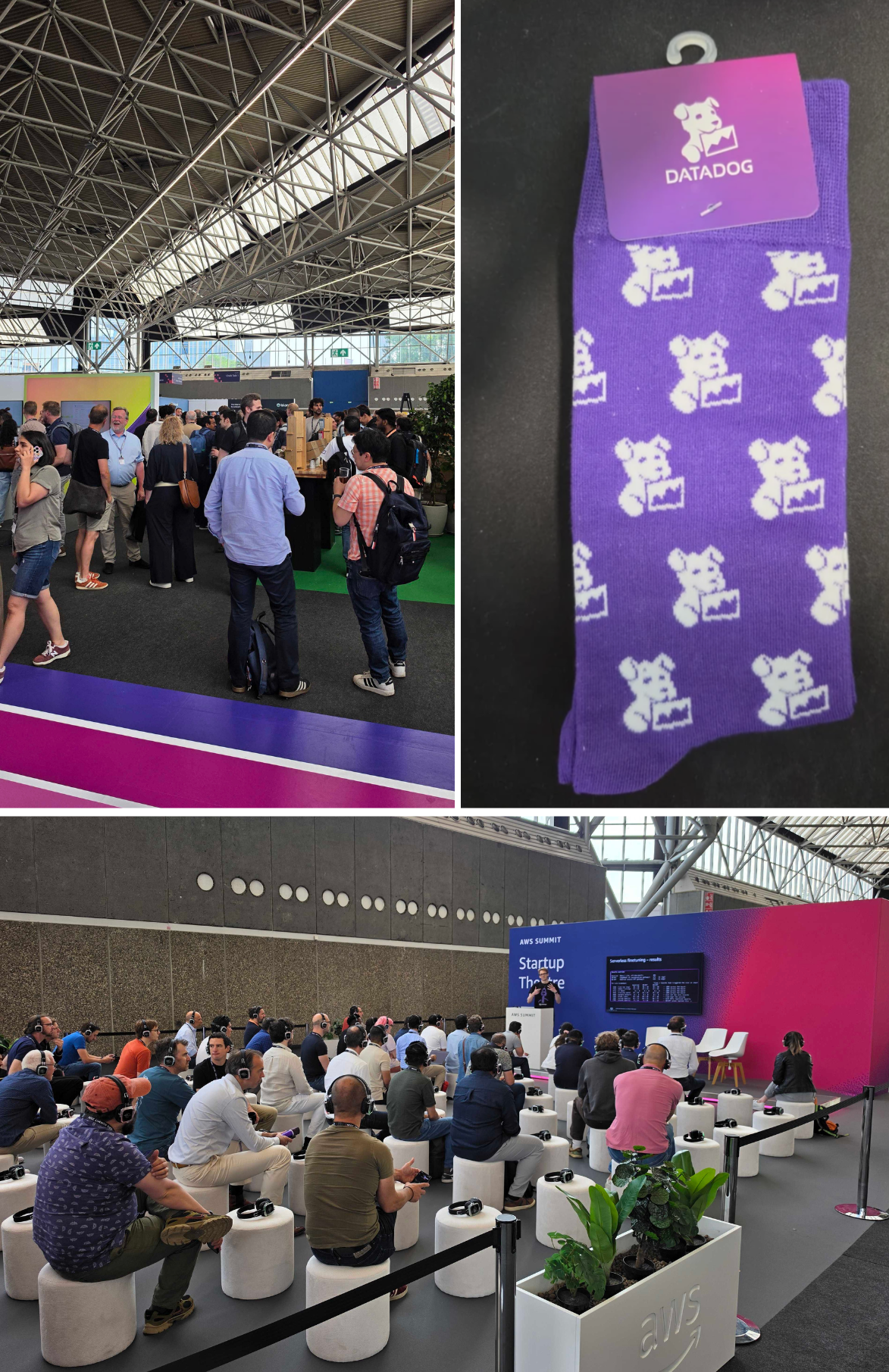
The program centered around breakout sessions where AWS experts, partners and customers took the stage to discuss real projects, concrete architectural decisions and new services. The setup was unusual: adjacent stages in an open-room format, with silent disco-style headphones for audio. Some minor distortion here and there, but the massive projection screens made sure you could always follow along, wherever you were sitting.
The central expo hall had plenty to offer beyond the sessions. Networking, booth visits, one-on-one conversations with AWS partners and industry experts. Fifty booths for a single-day event… that is a lot! And a genuine thank you to the Datadog team: the swag we walked out with made the entire Cloud team very happy.
The topics
The keynotes opened the day: short sessions covering the most important statistics and success stories. One insight stuck with us. Nearly everyone is working with AI, but only a handful of companies consider themselves truly ready. AWS introduced the term "POC graveyard": many organisations managed to get AI working in a proof-of-concept, but the step towards daily use turns out to be significantly harder.
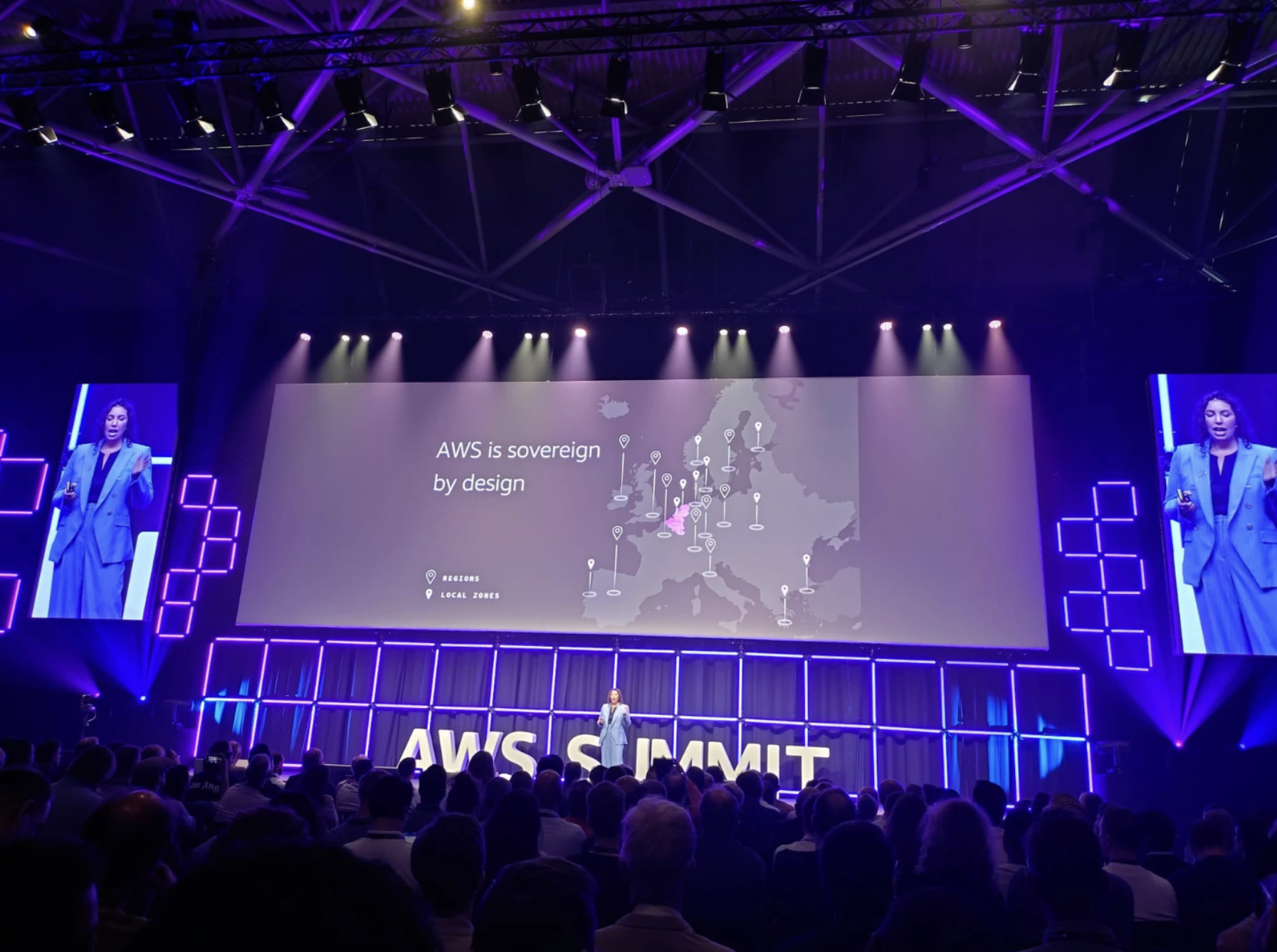
Beyond AI, there was also notable enthusiasm around Sovereign Cloud. Furthermore, new local zones are coming, including Amsterdam and Brussels, bringing compute resources closer to the end user and enabling lower-latency setups.
Kubernetes and platform engineering!
As firm believers in Kubernetes and CloudNative since 2017, we at ACA always keep a close eye on how EKS (the AWS implementation of Kubernetes) is evolving.
What stood out: platform engineering remains a central theme, and AI is playing a growing role within it. Not just as an accelerator for migrations, but as a fully-fledged capability within your platform, alongside security and governance.
Without getting too technical: the main advantage of this approach is that you are not locked into a tool AWS (or any other vendor) picks for you. You choose the tools that fit your own Kubernetes stack. That stack is then portable to any other cluster, whether that is Azure, GCP, on-premise or even a local setup.
What comes next?
We came back with two tools that stood out most: AWS Transform(1) and AWS Quick(2). We will publish separate, more technical posts on both shortly.
Curious about our approach to cloud and Kubernetes?