



From AI hype to practical impact: looking back at the VOKA trajectory on Agentic AI
What can AI truly mean for businesses today? And perhaps even more importantly: where does it not add value?
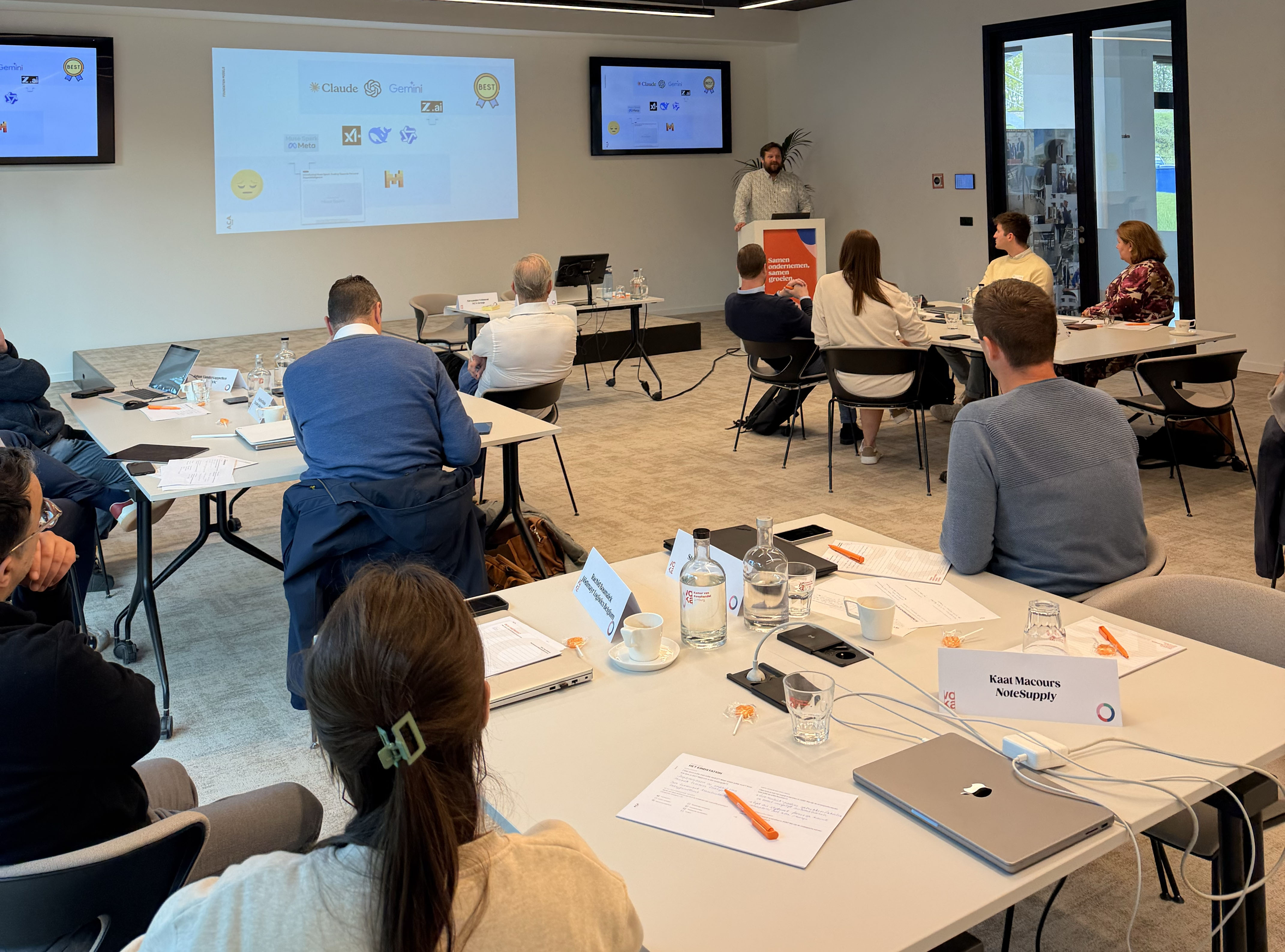
That question was at the heart of the four-part VOKA trajectory on Agentic AI, guided by ACA Group expert Alexander Frimout and Paulien Van Rymenant. Across four intensive sessions, Limburg-based SMEs and larger organisations not only explored AI together, but also got hands-on experience with the technology themselves.
From inspiration to proof of concept
The trajectory was built step by step: from inspiration and initial use cases to business feasibility, technical prerequisites and concrete roadmap exercises. The focus was not on AI as a buzzword, but on applications that already create real business value today.
“The main goal of these sessions was to show participants the business value agentic AI can already bring to organisations today, and to let them experiment with it in a hands-on way,” says Alexander Frimout, AI Lead at ACA Group.
The common thread throughout the trajectory? A pragmatic approach to AI.
“Doing AI for the sake of doing AI is not the right choice,” says Alexander. “Many companies want to jump on the AI train today, but without a clear business case, you risk investing in solutions that have little impact.”
That is why the workshops strongly focused on choosing “the right wagon” for each organisation and use case. Different AI approaches were discussed, including chatbots, workflow tools, AI products, custom solutions and agentic coding.
Practical insights for real business cases
In addition to inspiration and technology, topics such as privacy, security, AI Act compliance and governance were extensively covered. Many participants were looking for clear guidance on where AI does and does not create value today.
According to Alexander, the biggest opportunities currently lie in administrative and repetitive processes, such as logistics, HR and customer service.
For decades, organisations have been doing what we call ‘monkey work’: repetitive tasks that add little value. Thanks to AI, we finally have a ‘little monkey’ that can automate that work, allowing employees to focus on tasks where they can truly make an impact.
— Alexander Frimout, Lead AI Innovation at ACA Group



Throughout the trajectory, it also became clear how quickly participants started experimenting with AI themselves. What began as curiosity and cautious enthusiasm soon evolved into concrete experiments, automations and demos within their own organisations.
The sessions mainly helped me understand where AI truly adds value, and perhaps even more importantly: where it is not needed. That insight alone was incredibly valuable.
What I really appreciated was how practical everything remained. No theoretical story, but immediately applicable to my own business.
Despite having relatively limited technical knowledge, I still managed during the course to build a working internal chatbot connected to our knowledge base. Colleagues can now independently look up workflows and instantly get the right explanation without constantly needing to ask someone else.
— Robbie Wils, Owner at Eurofresh


Hands-on experimentation as an accelerator
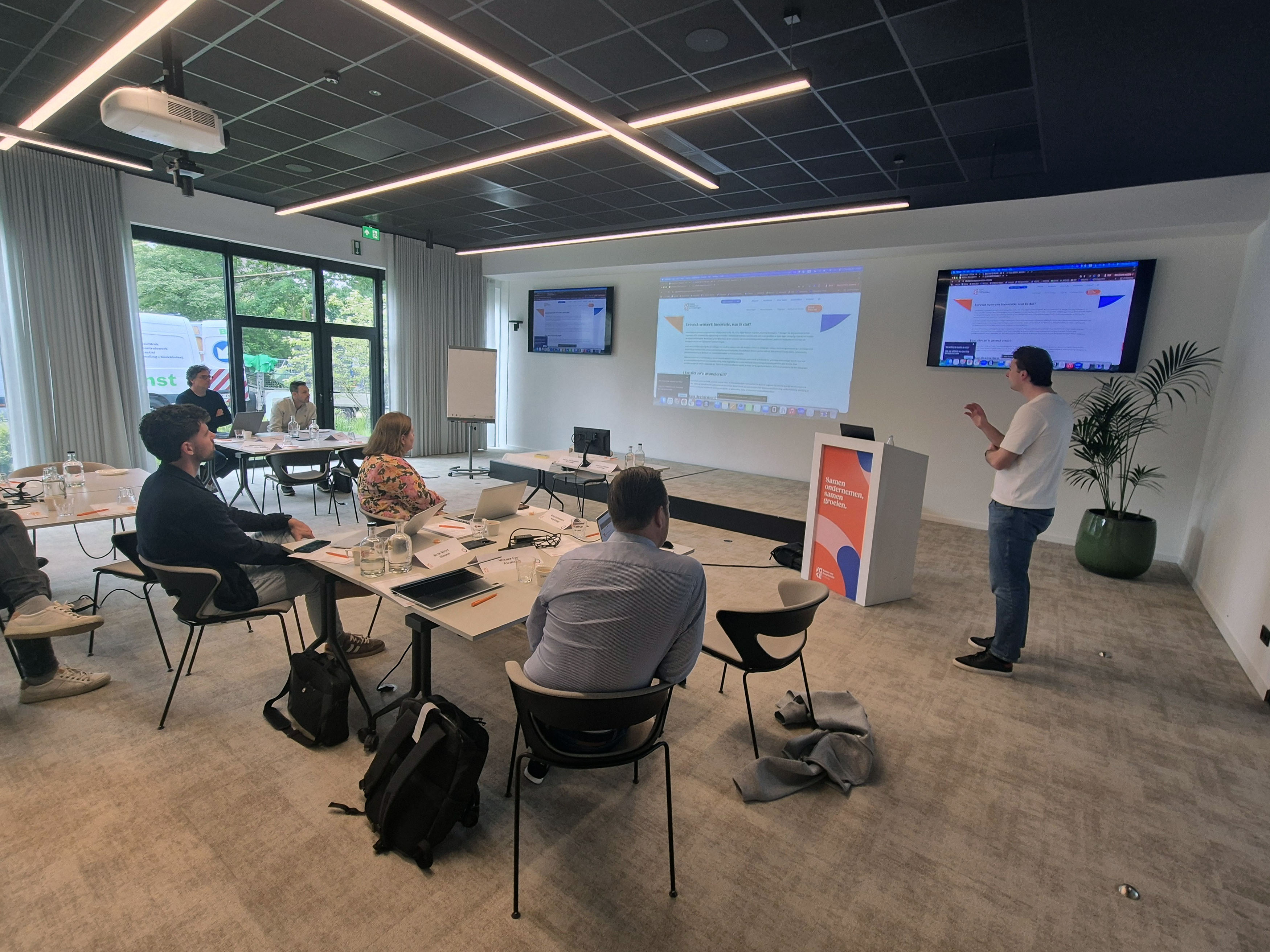
The hands-on approach proved to be one of the biggest strengths of the trajectory for many participants. Between sessions, several attendees were already actively experimenting with their own use cases and automations.
The interaction between participants also played an important role. By exchanging practical cases and experiences, participants gained a broader understanding of how AI is already being applied across different industries today.
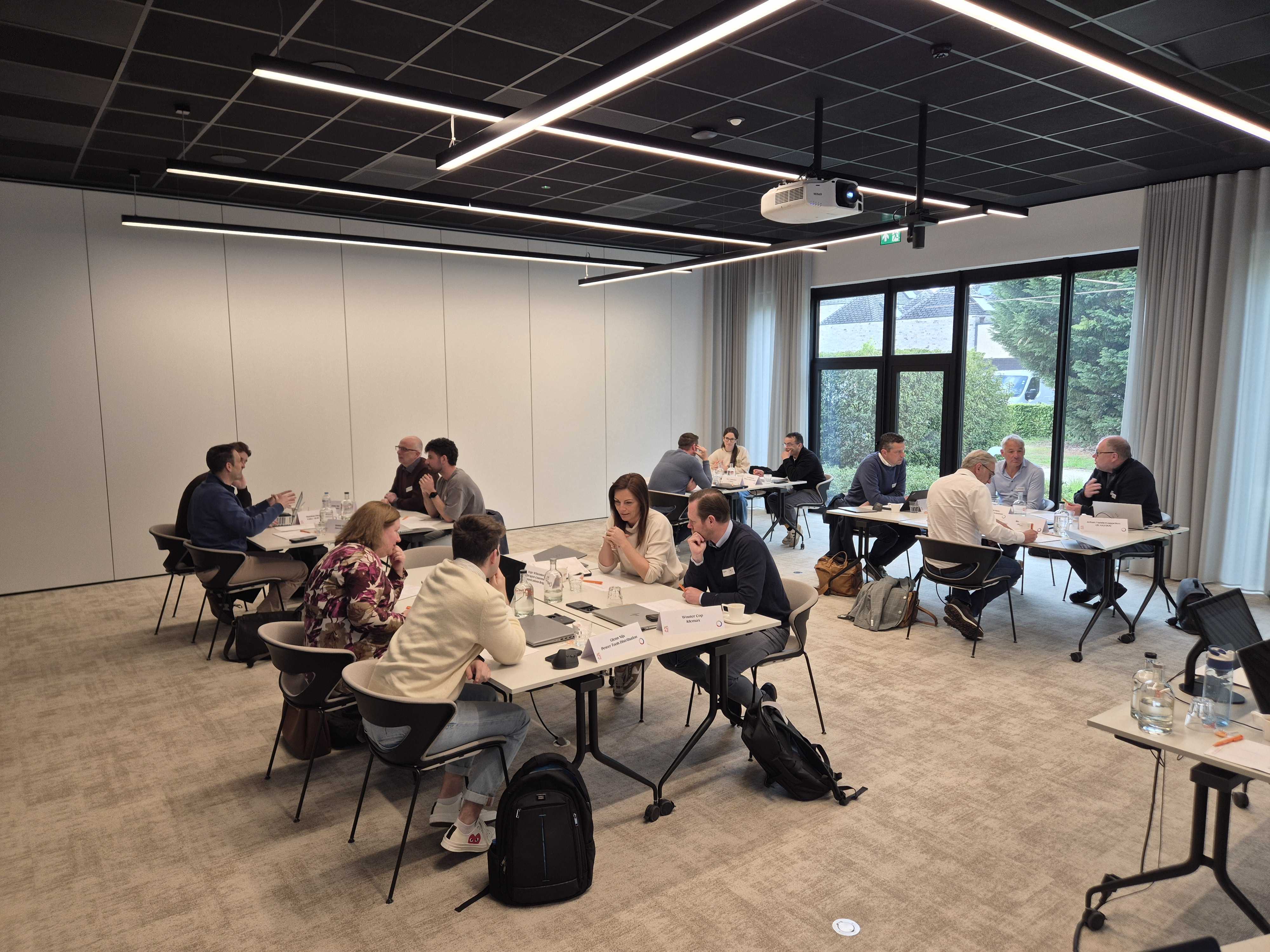
“We started at a high level and gradually went deeper into detail with each session,” Alexander explains. “It’s important to start small and with a clear business case, while still keeping the bigger picture in mind. Otherwise, you quickly end up with a patchwork of disconnected AI applications.”
The workshops immediately made AI practically applicable for me. Thanks to the hands-on approach, I was able to build a meaningful and time-saving application myself in a short amount of time.
What I learned most is that you truly understand AI by experimenting with it: simply testing tools and using your favourite LLM to get extra information and guidance helps you progress surprisingly fast.
The interaction with the other participants and their real-life cases was also extremely valuable, because it gave insight into how differently AI is already being used today and which approaches or tools work well for others.
— Bo Van de Weyer, R&D Manager at Simalco


A community that keeps experimenting
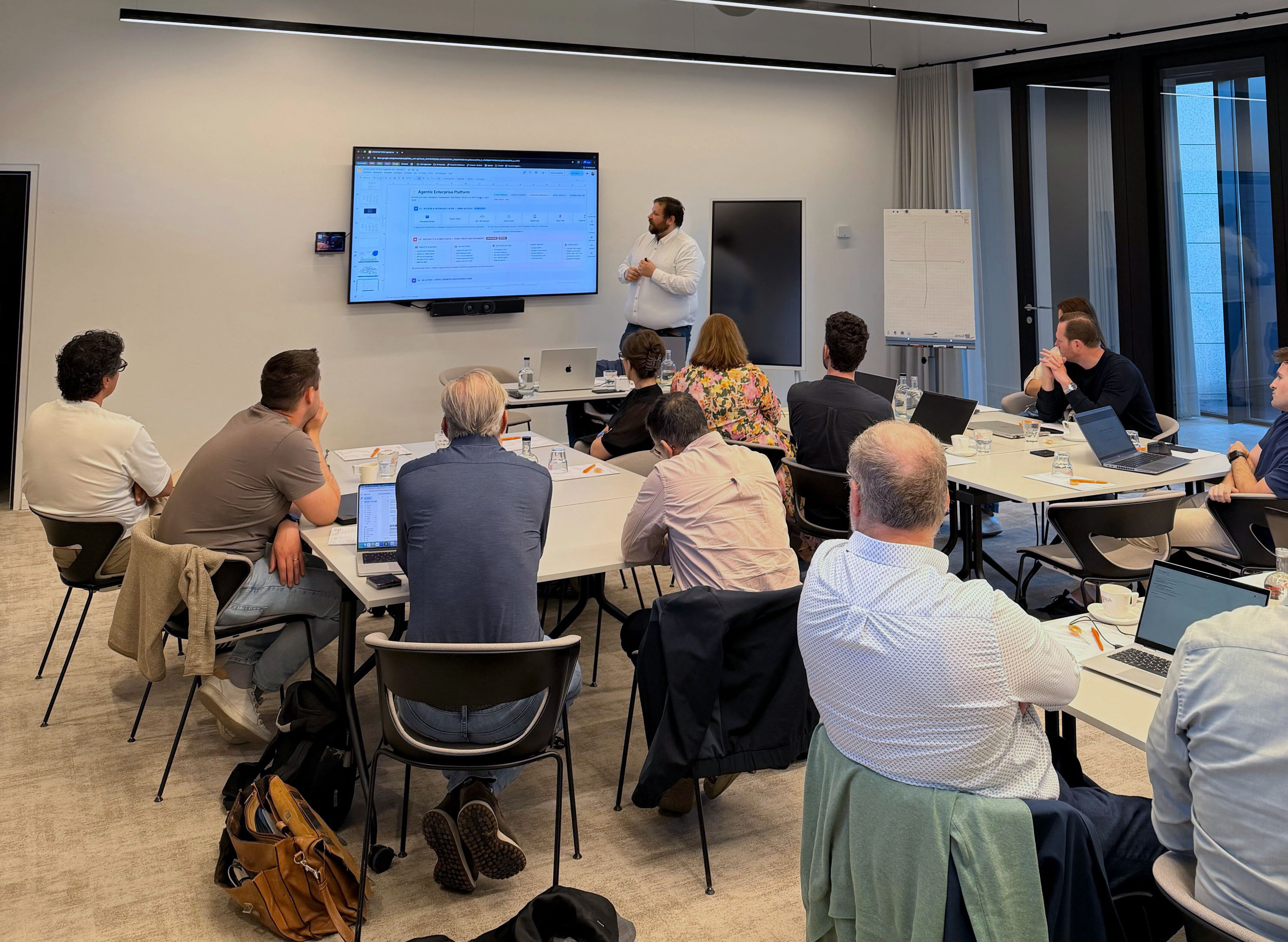
There was an average of around ten days between each session. Every workshop also started with a short update on the latest AI news and developments within the landscape.
According to Alexander, that sense of community grew strongly throughout the trajectory.
“Many participants said at the end that they were going to miss those AI updates,” he says. “One participant even built his own AI agent to continue receiving those updates automatically.”
A trajectory that clearly resonated
The evaluations also showed that the trajectory was very positively received. Participants gave the final session an average satisfaction score of 8.7/10. The content, organisation and guidance by Alexander Frimout were all highly appreciated.
Above all, the trajectory demonstrated that successful AI adoption today is not about hype or massive transformations, but about experimenting, learning and gradually creating value within your organisation.
Curious about how AI can be practically applied within your organisation?
Feel free to get in touch with our experts.