

Enlit Europe 2025: trilemmas, car batteries that create balance, and metering 2.0
Enlit is Europe's largest event on energy transition. Tom Claus and Sven Sambaer went on behalf of ACA Group to meet up with customers and partners, and to keep their eyes open for new ideas and the latest trends. A report on the energy trilemma, the car battery as guardian of the balance in the distribution network, and smart metering 2.0.
What is Enlit Europe?
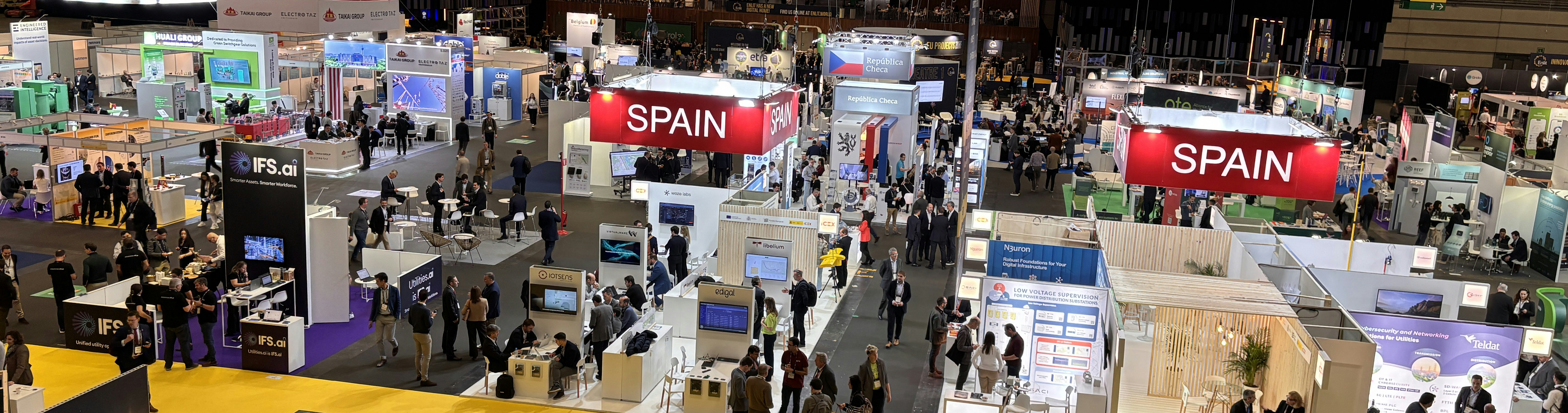
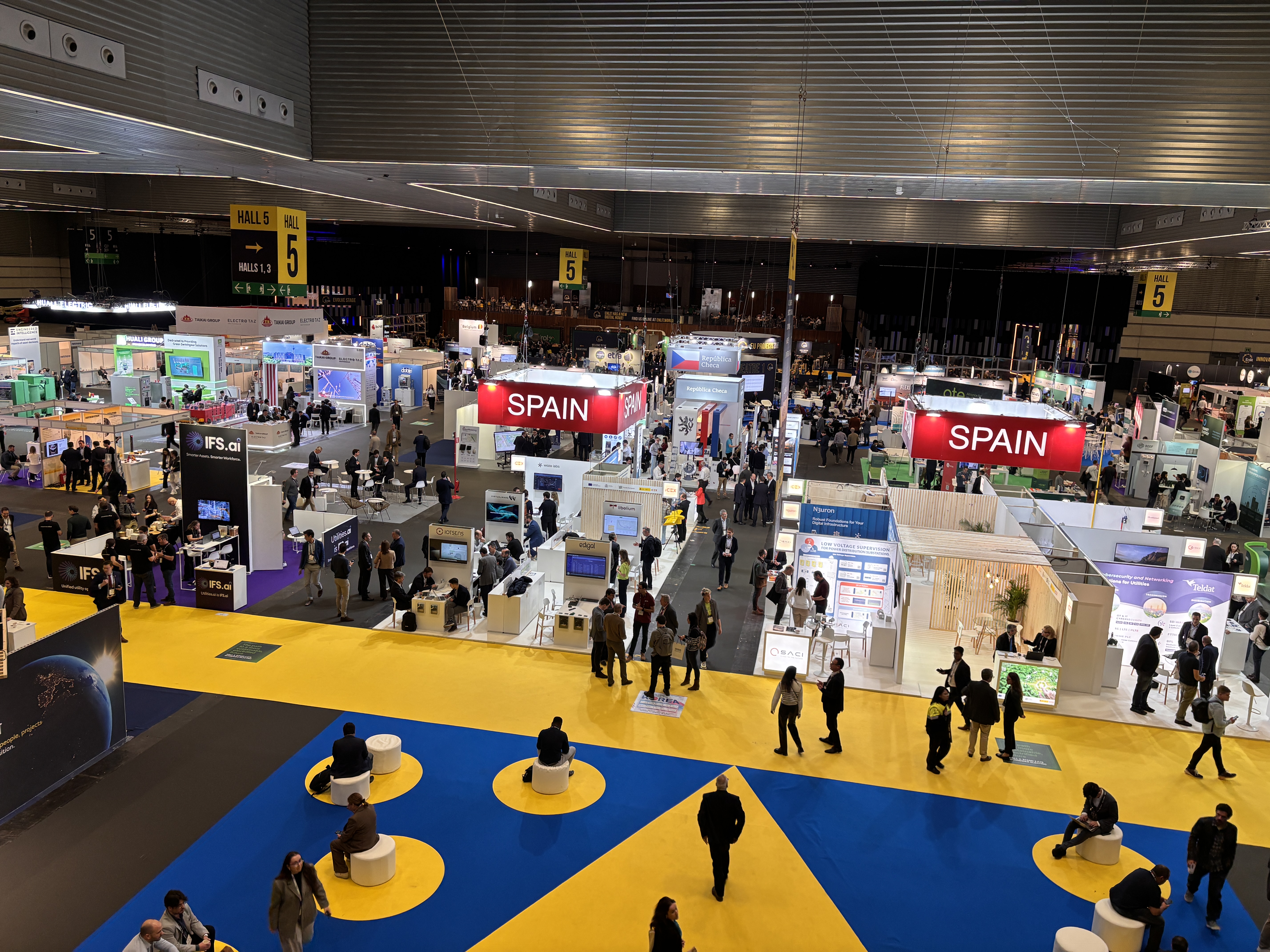
For three days, the Bilbao Exhibition Centre in the Basque Country was the European nerve center of the energy transition. With more than 700 exhibitors, 500 speakers, and 15,000 professionals, Enlit Europe has become an established event in this field. This event brings together everyone and everything related to technology, regulation, grid management, flexibility, digitization, and innovation.
Based on our work for companies and partners in Energy & Utilities, this is the ideal place to discover which technologies will soon become mainstream among grid operators, suppliers, and energy communities. And to find out which themes are top of mind.
We have picked out three of those themes.
1. Grid resilience is key
Virtually every presentation had the same challenge as a starting point: how does one create a resilient electricity grid in an energy system that is becoming increasingly complex and digital?
- The recent large-scale blackout on the Iberian Peninsula was often cited as a worst case scenario. Parts of Spain and Portugal were cut off for more than ten hours.
- Speakers referred to a new energy trilemma: security, resilience and adaptability.
- AI was constantly mentioned as a crucial link in all this: from predictions to optimisation of grid load and maintenance.
The conclusion was clear: the energy transition is not just about production capacity, but above all about the robustness and flexibility of our distribution network.
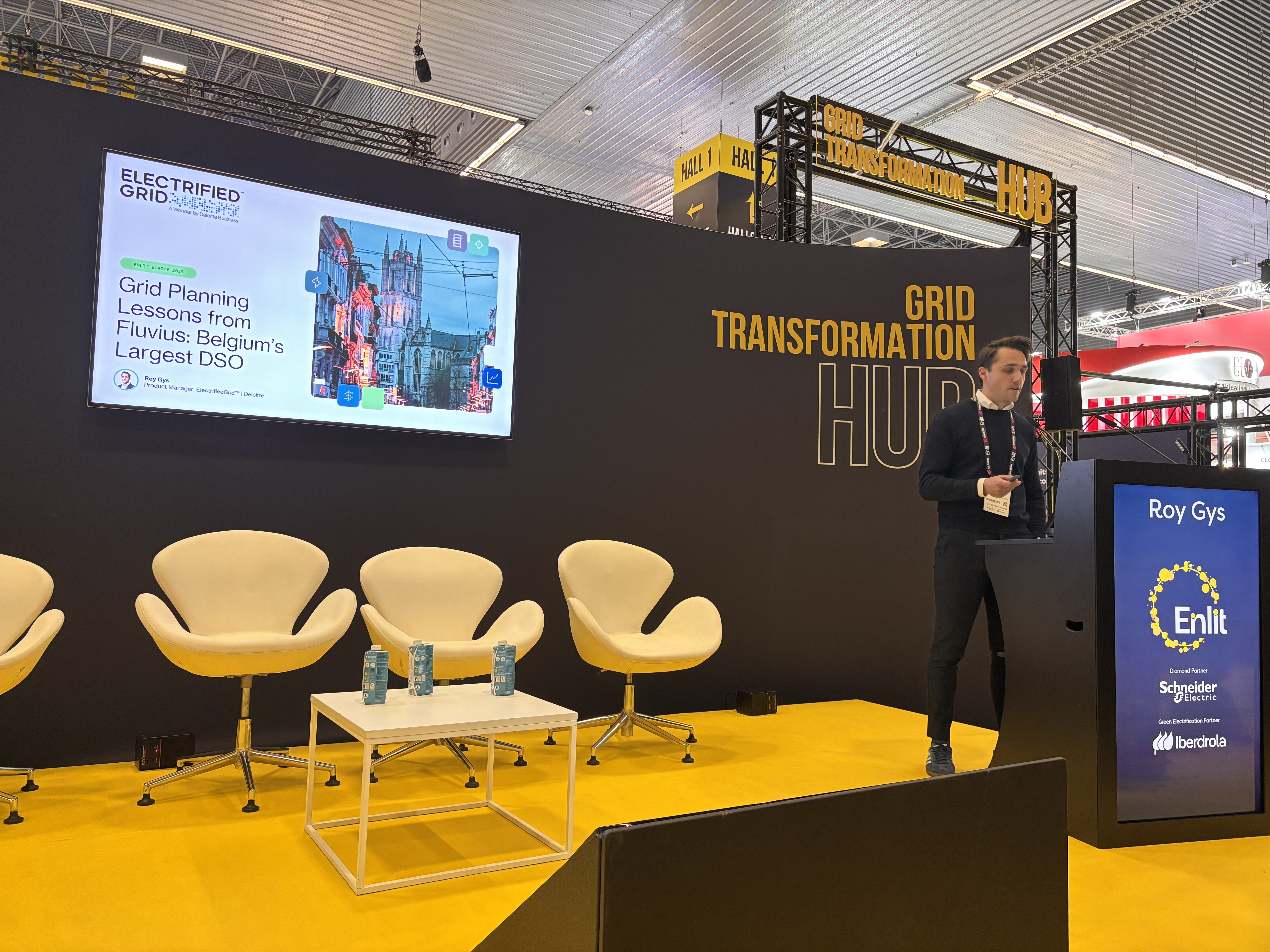
The presentation Navigating Electrification Uncertainty Using Data- & AI-Driven Solutions given by Roy Gys, Product Manager ElectrifiedGrid - Deloitte.
2. Flexibility as a cornerstone
In line with European ambitions, flexibility was a recurring theme throughout Enlit.
- The Demand-Side Flexibility exhibition area was very popular
- The hot topics: V2G (Vehicle-to-grid), industrial flexibility, energy communities, and dynamic control.
- A lot of attention went to market integration: how to use flexibility smartly in day-ahead, intraday, and balancing markets.
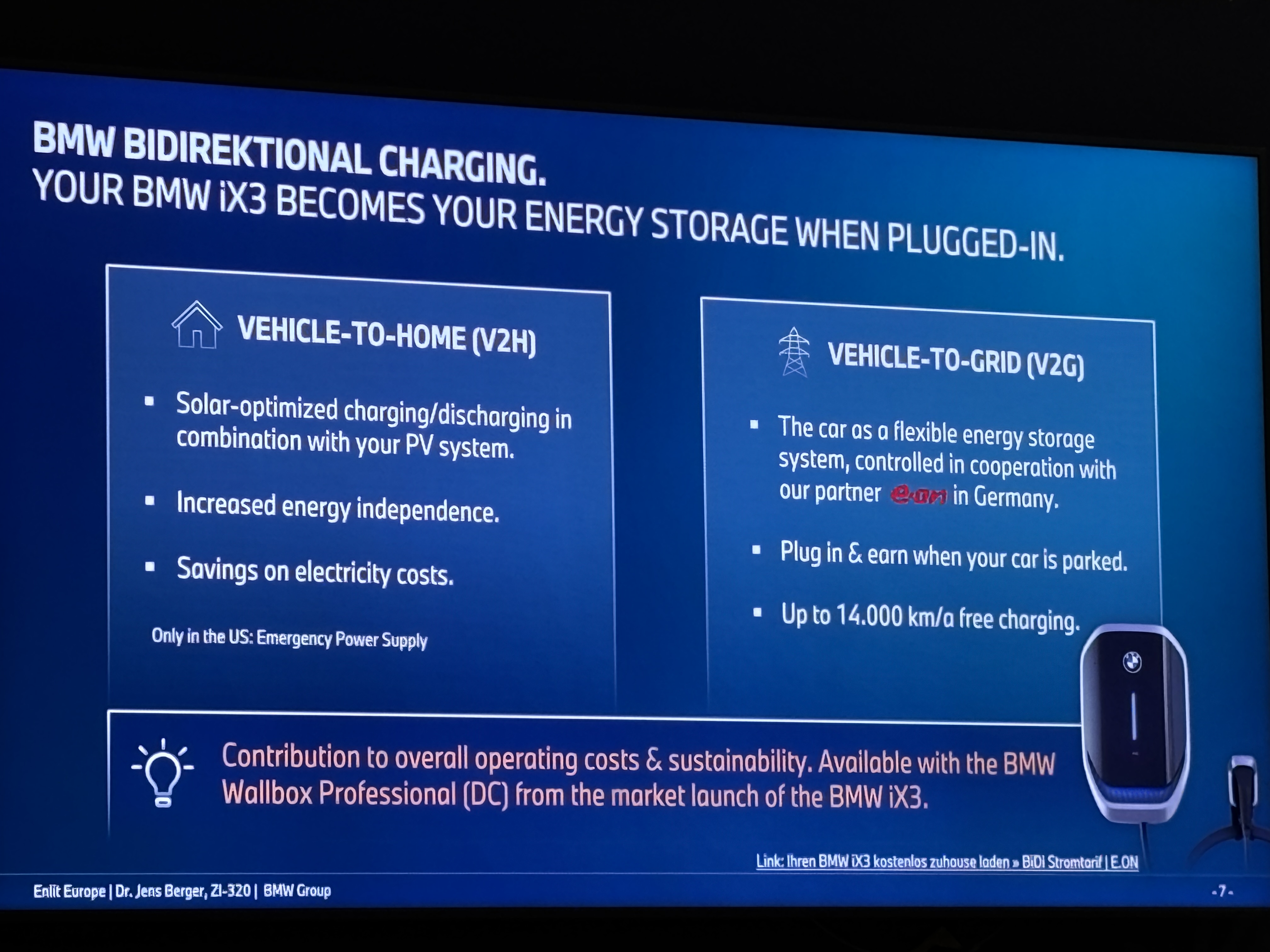
For example, there was a presentation by E.On and BMW showing how cars play a role in balancing the grid. E.On rewards customers for plugging in their charged cars and making their batteries available for grid balancing.
3. Smart grids and grid-edge technology are evolving to phase 2.0
Smart metering was everywhere, but with a clear new approach:
- The focus is shifting from metering to behind-the-meter intelligence.
- Smart meters are evolving into sensors that reveal neighborhood-level needs.
- Grid-edge solutions combine data from meters, charging stations, IoT, and energy storage.
- There was a lot of attention to the practical side: much of this technology looks promising, but at the same time remains fragmented and difficult to integrate into legacy networks.
In other words: smart grid technology is mature enough to have an impact, but (technical) integration remains a challenge.
What did we see on the floor?
Demand-Side Flexibility Zone
One of the busiest areas, where Flexibility Managers, VPP operators, grid analysts, and energy traders met.
What stood out in particular:
- A lot of solutions focus on real-time forecasting, portfolio optimization, and automation.
- Tools that leverage flexibility across multiple markets simultaneously.
- Systems that attempt to bridge markets and grid constraints.
EU Projects Zone
An inspiring area where dozens of European research projects shared their results. This zone perhaps provided the most insight into the road map of European policymakers and innovation networks.
What did we notice?
- A lot of attention for local energy communities, storage, and sector coupling.
- Tools for grid planning, congestion management, and simulation.
- Inspirational stories about V2G, skills development, and faster permitting procedures.
- Studies showing that hundreds of gigawatts of renewable projects are ready to be deployed, yet are on hold due to grid constraints.
One very interesting initiative was Decodit.
This project aims to simplify all the complexities surrounding smart energy saving and energy transition for European consumers. The route to success: a commitment app and digital AI assistant.
A super cool idea, and something every consumer is waiting for. But as is often the case with European projects, development will take quite a while. Belgian consumers will have to wait another four years or so to reap the benefits.
What are our take-aways from Enlit Europe 2025?
Enlit Europe 2025 made it clear that the energy sector faces a number of persistent challenges.
Grid congestion remains the biggest pain point, with a long queue of renewable projects and new consumers. In addition, regulatory complexity, the integration of new technology into existing systems, and a growing skills gap are causing delays. Finally, the question remains of how we can put the end user at the center of an increasingly technical energy landscape.
Enlit confirmed to us at ACA Group how important data, digitization, and collaboration are in making the energy system future-proof.
💡 Are you facing a similar challenge? We would be happy to help you find a solution, just as we have done for +100 customers in this sector.